
The Complete Guide to Shipping Freight to Papua New Guinea
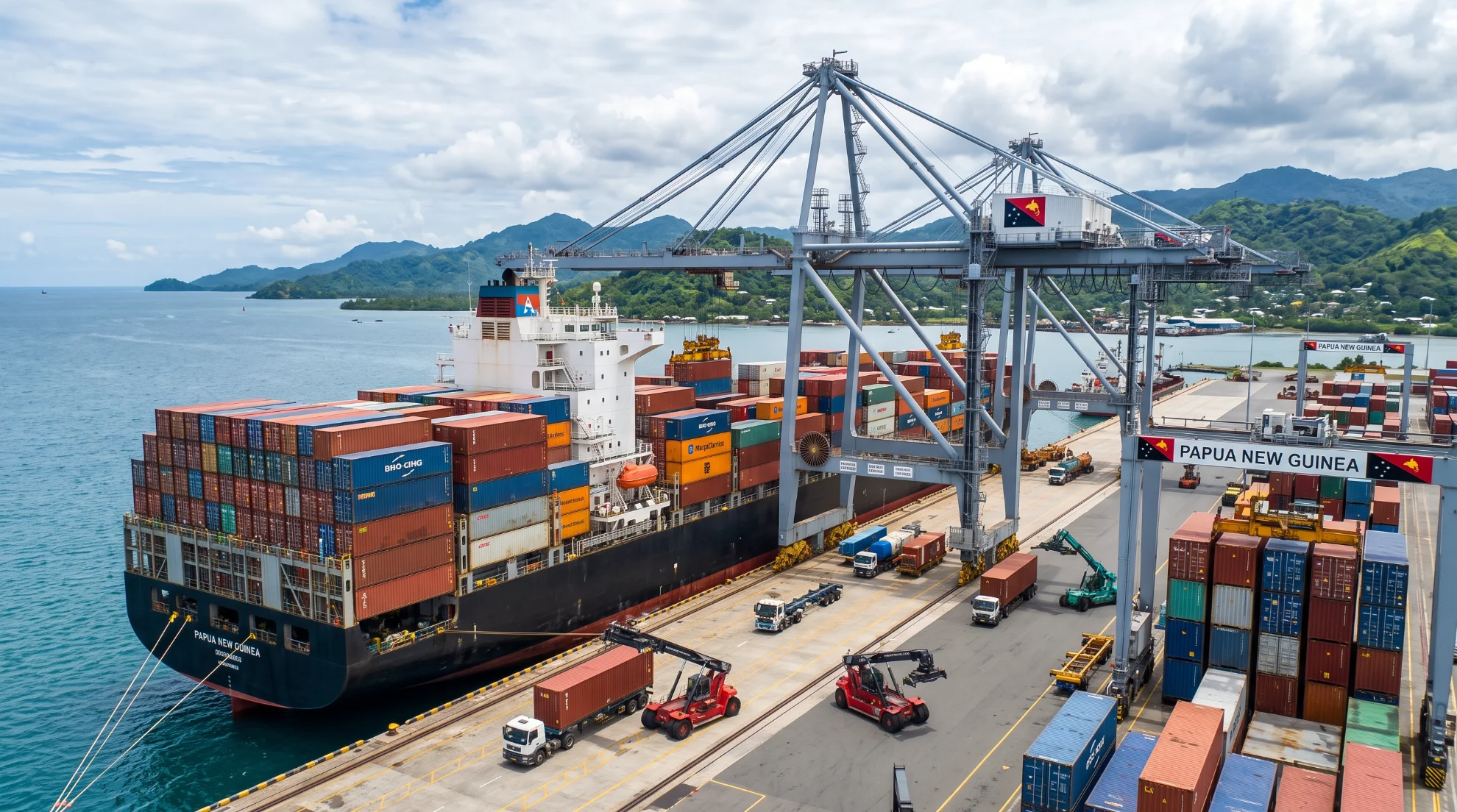
Getting cargo into PNG is less about the ocean leg than everything either side of it. This guide explains how freight to PNG really works, from choosing a port and a mode to clearing customs and getting goods to where they’re needed.
In this guide
- Let the final destination decide the port: Lae for the Highlands and inland projects, Port Moresby for the capital. There’s no road between them.
- Every commercial import needs a customs entry lodged by a licensed customs broker in PNG.
- Budget for import duty, which depends on tariff classification, plus 10% GST, both calculated on a CIF basis.
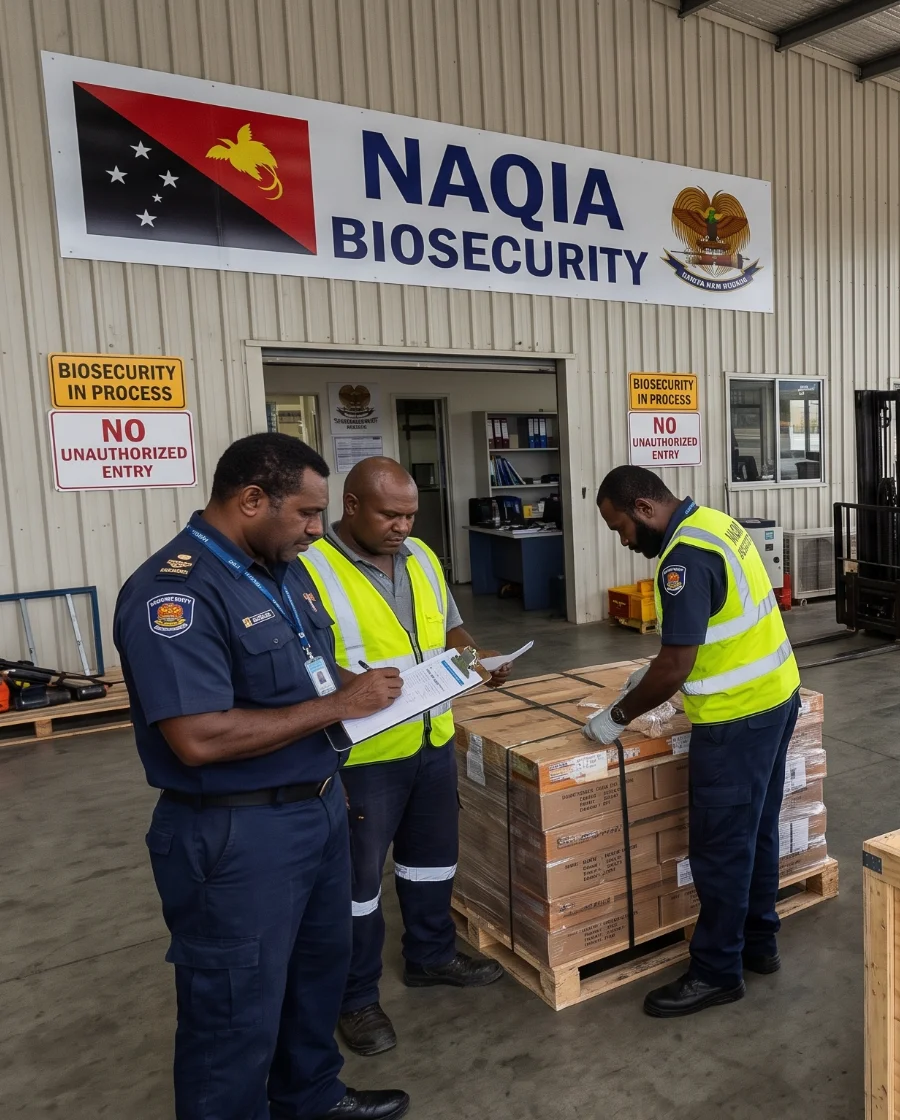
- NAQIA rules apply to food, plant and animal products, and all wood packaging must meet ISPM-15.
- Direct sailings from Brisbane take about four to eight days; from Asia, anywhere from around nine days to several weeks.
How freight to PNG actually works
Papua New Guinea relies heavily on imported goods, from fuel and food to machinery, building materials and consumer products. Most of it arrives by sea through two international container gateways, Lae and Port Moresby, on services from Australia, Asia, New Zealand and the wider Pacific. A smaller share, usually urgent or high-value cargo, comes in by air through Jacksons International Airport in Port Moresby.
PNG has a few characteristics that catch out first-time shippers. The country is mountainous, the road network is limited, and the capital isn’t connected by road to Lae or the Highlands. Customs entries must go through a licensed broker, biosecurity rules are taken seriously, and getting goods from the wharf to their final destination can cost as much as the ocean freight itself.
The most useful way to think about a PNG shipment is as a chain with four links: the origin leg, the sea or air leg, clearance at the port of entry, and the onward journey. A delay or poor decision at any one of them flows through to the rest. This guide works through each link and points you to more detailed guides where you need them.
Port Moresby or Lae: choosing the right entry port
This is the most important decision in most PNG shipments, and it should be driven by one question: where does the cargo need to end up?
Lae is PNG’s main cargo port and its industrial hub. The South Pacific International Container Terminal at the Lae Tidal Basin is the country’s largest container-handling facility, and Lae handles close to half of all cargo moving across PNG’s wharves. Just as importantly, Lae sits at the start of the Highlands Highway, the road corridor that supplies the Highlands provinces and many of the country’s major resource projects. For anything heading inland, it usually pays to ship directly into Lae and work with freight forwarders to Lae who can manage clearance and the onward road leg as one job.
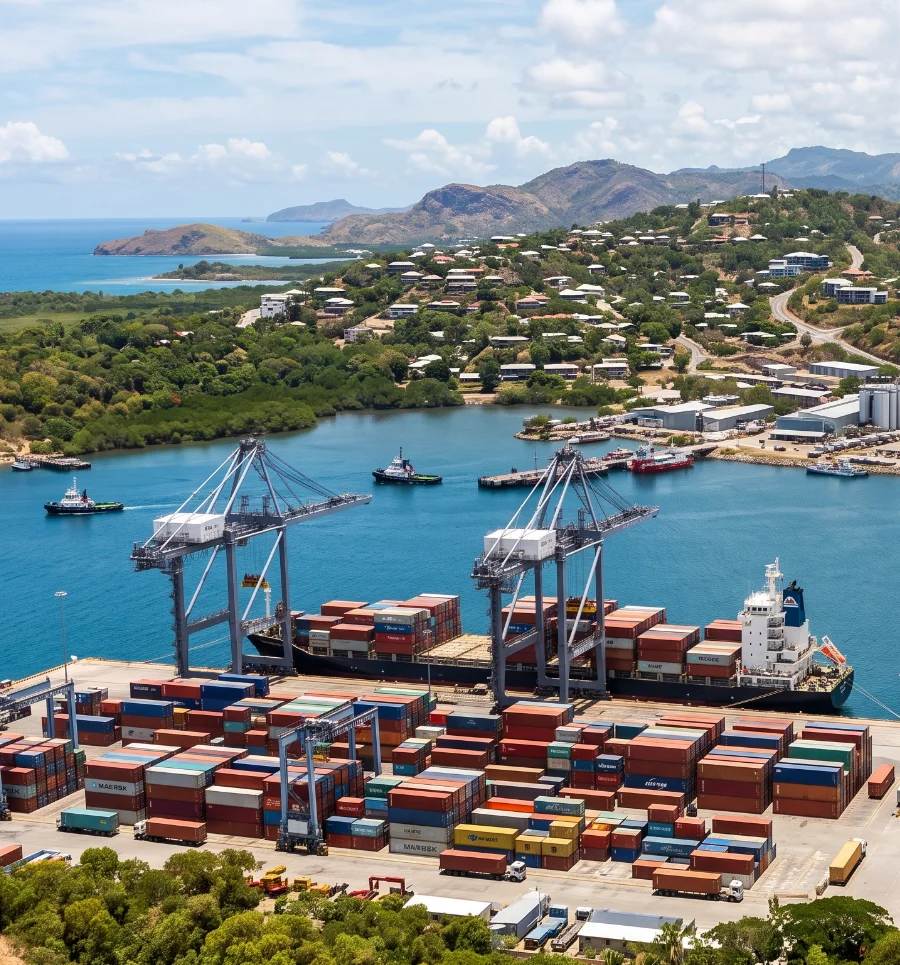
Port Moresby’s international container traffic is handled at Motukea International Terminal, about 12 kilometres from the city centre. It serves the capital and Central Province and handles roughly a quarter of the nation’s cargo. If your goods are going to businesses, government agencies or projects in and around Port Moresby, it’s the natural choice.
The catch is that there’s no road between the two cities. Cargo landed in Port Moresby but needed in Lae, Goroka or Mount Hagen has to make a second journey by sea or air, adding cost, handling and days to the schedule. It’s one of the most common and expensive mistakes on this trade lane.
| At a glance | Lae | Port Moresby |
|---|---|---|
| Container terminal | South Pacific International Container Terminal, Lae Tidal Basin | Motukea International Terminal |
| Best suited to | Morobe, the Highlands and inland projects reached by road | Port Moresby, Central Province and nearby areas |
| Road access inland | Start of the Highlands Highway | No road link to Lae or the Highlands |
| Share of national cargo | Close to half | Around a quarter |
PNG also has smaller ports such as Madang, Wewak, Rabaul, Kimbe and Alotau. They handle lower volumes and fewer international calls, and many are served by coastal or feeder vessels from Lae and Port Moresby.
Go deeper
Sea freight or air freight?
Sea freight carries the bulk of PNG’s imports, and for most commercial cargo it’s the only option that makes economic sense. The real choice is usually about how your cargo travels by sea.
Full container load (FCL)
You book a whole 20-foot or 40-foot container for your goods. It’s usually the more economical option once you have enough cargo to fill most of a container, and it limits handling. That matters on a route where goods may be moved several times before they reach their destination.
Less than container load (LCL)
Your cargo shares a container with other shippers’ goods. It suits smaller consignments, but consolidation and unpacking add time at both ends, and fixed destination charges can be high relative to the freight on a small shipment. LCL is normally charged on volume in cubic metres or on weight, whichever produces the higher figure.
Breakbulk, flat racks and project cargo
Machinery, vehicles, steel and oversized equipment often travel on multipurpose vessels with their own cranes, on flat racks, or as roll-on/roll-off cargo. This is routine for mining, energy and construction projects, but needs earlier booking.
Air freight
Air freight into PNG mostly arrives at Jacksons International Airport in Port Moresby. It’s fast but expensive, and it makes sense for urgent spare parts, medical supplies, high-value goods and perishables. Remember that air cargo landing in Port Moresby may still need a domestic flight to reach Lae, the Highlands or the islands.
Go deeper
How long does shipping to PNG take?
Transit times depend on where the cargo starts, the service it travels on, and whether it has to tranship along the way.
From Australia, Brisbane is the main hub. Direct services from Brisbane reach Port Moresby or Lae in roughly four to eight days, depending on the vessel’s rotation. Cargo from Sydney or Melbourne typically adds about a week, because services often call at those ports before Brisbane.
From Asia, direct services can be quick. Some North Asia services reach Lae from Hong Kong in around nine days. Much of the cargo from Asia, though, tranships through hubs such as Singapore or Brisbane, which can stretch the journey to several weeks.
Sea transit is only part of the picture. Allow time for export cut-offs at origin, discharge and clearance in PNG, and the onward leg to your final destination. A realistic door-to-door plan builds in a buffer for each, and treats published schedules as a guide rather than a guarantee.
Go deeper
Clearing customs in PNG
Every commercial import into PNG has to be formally declared to the PNG Customs Service. The entry is lodged electronically through Customs’ ASYCUDA World system, and only a licensed customs broker can lodge it on your behalf. The PNG Customs Service’s import procedures set out the full requirements.
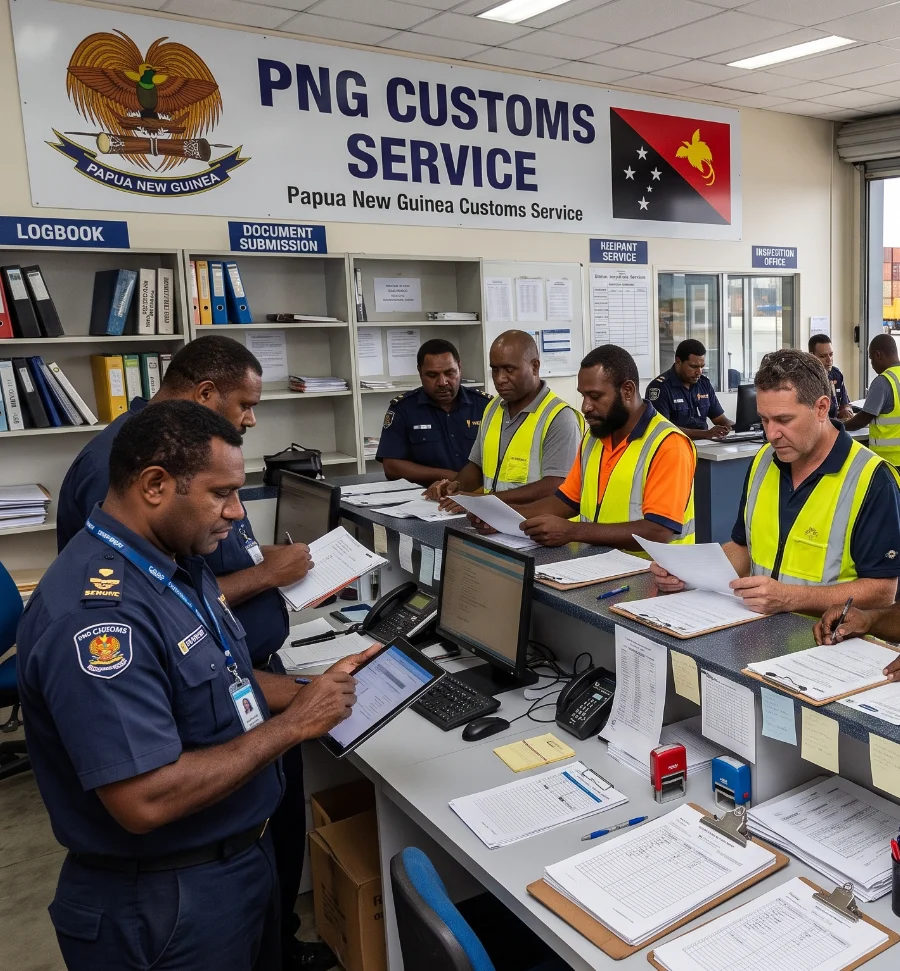
How the process works
- Register and appoint a brokerThe importer registers with Customs using its Tax Identification Number and authorises a licensed customs broker on Customs Form G26.
- Lodge the import entryThe broker lodges the declaration, Customs Form 15, in ASYCUDA World. It can be lodged up to five working days before the goods arrive, which helps avoid waiting at the wharf.
- Documents are checkedCustoms reviews the commercial invoice, packing list, bill of lading or air waybill, valuation information and any permits, checking classification, value and origin.
- Inspection, if requiredCustoms, and NAQIA for biosecurity purposes, may examine the goods before they’re released.
- Duties and taxes are paidImport duty, any excise and GST are assessed and must be paid.
- Release and collectionOnce Customs and biosecurity requirements are met and port and shipping line charges are settled, the cargo can be collected.
Keep every record related to the import, including invoices, contracts, payment records and correspondence. PNG Customs requires them to be kept for five years and can ask for them during an audit. Goods that sit uncleared for too long can also end up being sold at auction, so don’t leave cargo at the port while paperwork is sorted out.
Go deeper
Import duties, GST and the true landed cost
PNG calculates import duties and taxes on a CIF basis, meaning the value of the goods plus the cost of freight and insurance to PNG. The duty rate depends on the tariff classification of the goods, so getting the HS code right matters. Some goods, including vehicles, alcohol, tobacco and fuel, also attract excise.
Import GST is charged at 10% on most commercial imports. It’s calculated on the customs value plus duty and any excise, so it compounds on top of them.
Duties and taxes are only part of the landed cost. A realistic budget also includes origin charges, sea or air freight, marine insurance, terminal handling and other destination charges, delivery order fees, customs brokerage, storage or demurrage if cargo isn’t collected promptly, and inland transport. On smaller shipments, destination charges can be surprisingly large compared with the freight.
Your Incoterms decide who pays for what. Under FOB, the buyer pays the main freight and everything after it, and takes on the risk once goods are loaded at origin. Under CIF, the seller pays freight and minimum insurance to the PNG port, although risk still passes to the buyer at loading. Under DAP, the seller delivers to a named place, but import clearance, duties and taxes stay with the buyer. Agree the term in writing before anything is booked.
Go deeper
Biosecurity: NAQIA and ISPM-15
The National Agriculture Quarantine and Inspection Authority (NAQIA) manages biosecurity at PNG’s borders. Its rules matter most for food, plant and animal products, but they also reach into packaging and used equipment.
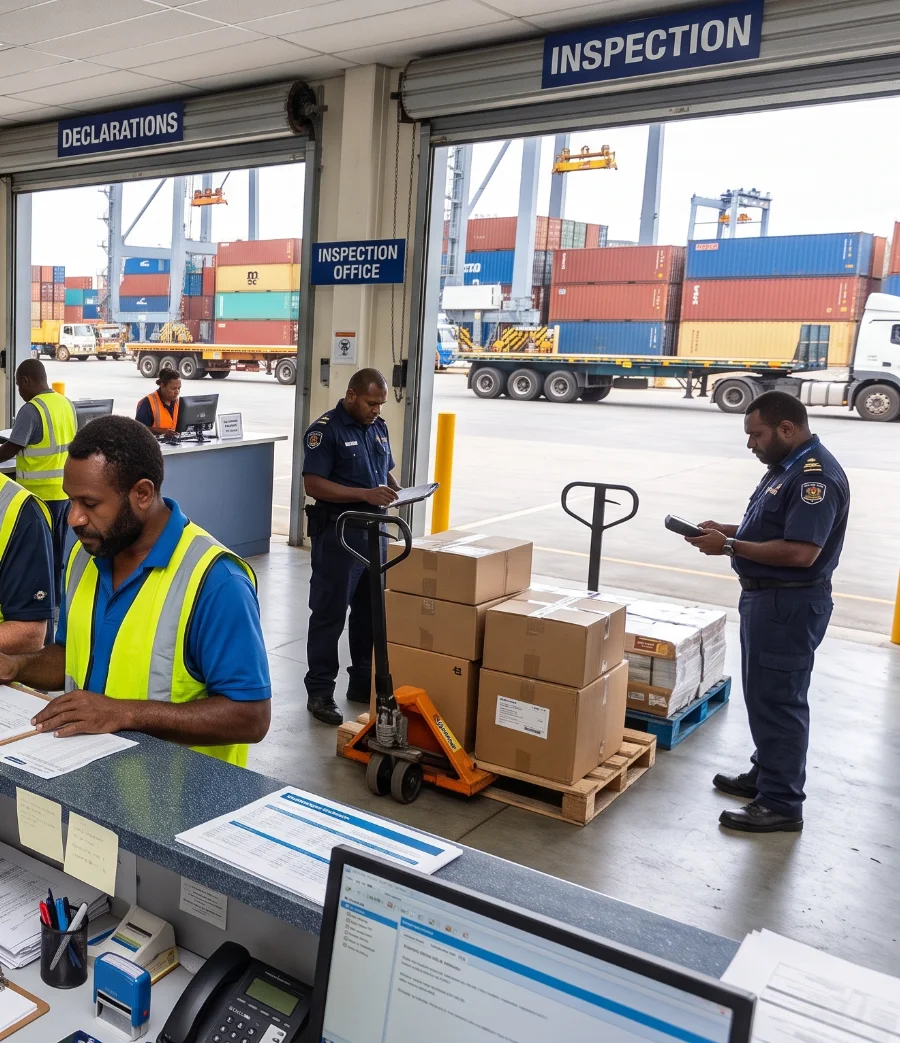
Many agricultural and food products need a NAQIA import permit, and it needs to be in place before the goods are shipped. Arranging it after arrival risks having the consignment held, treated, re-exported or destroyed.
Wood packaging such as pallets, crates and dunnage must comply with ISPM-15, the international standard for treating wood packaging, and carry the official treatment mark. Non-compliant packaging can lead to extra quarantine charges, treatment or rejection. Used vehicles, machinery and equipment should also arrive thoroughly clean and free of soil and plant material, which are common reasons for biosecurity holds.
For Australian exporters, the Department of Agriculture, Fisheries and Forestry’s Micor database sets out PNG’s import conditions for many plant and animal products, including where a NAQIA import permit is required.
Go deeper
Restricted goods, dangerous goods and heavy equipment
Some goods are prohibited from import into PNG, and others can only come in with a permit or licence. The legal list sits in the Customs (Prohibited Imports) Regulations, and checking it before you buy, rather than after you ship, saves a great deal of trouble.
Dangerous goods, including many chemicals, gases, batteries and explosives used in mining, need correct classification, packing and declarations. Carriers only accept them on approved services, so lead times are often longer.
Vehicles and heavy machinery bring their own considerations: excise, biosecurity cleanliness, and the choice between containers, flat racks, roll-on/roll-off and breakbulk shipping.
Beyond the wharf: getting cargo to its final destination
For many PNG shipments, the hardest part of the journey starts when the cargo leaves the terminal.
The Highlands Highway
The Highlands Highway runs inland from Lae through Goroka and Mount Hagen to Enga, Hela and the Southern Highlands, a journey of around 700 kilometres to the furthest major sites. The Highlands are home to about 40% of PNG’s population, and the highway is their commercial lifeline as well as a key route for mining and gas projects. Much of it is two-lane road that is regularly affected by landslides, washouts and potholes, and security along some sections is a genuine concern. Experienced transport operators plan around this with convoy practices, secure loading and realistic schedules.
Coastal shipping
Island provinces such as East and West New Britain, New Ireland and Manus, along with the Autonomous Region of Bougainville, rely on coastal shipping from Lae and Port Moresby. Coastal sailings can be less frequent than international services, so timing the connection is part of planning the shipment.
Domestic air freight
Some mine sites, missions and communities can only practically be reached by air. Domestic air freight and charter flights carry everything from spare parts to food supplies, within the weight and size limits set by the aircraft and the airstrip.
Warehousing and consolidation
Both Lae and Port Moresby have warehousing and consolidation services. Holding stock close to the port, or combining several suppliers’ goods before the inland leg, can reduce handling and transport costs.
Go deeper
Shipping from Australia to PNG
Australia is one of PNG’s closest and most important trading partners, and Brisbane is the hub for most services. Regular sailings connect Brisbane with Port Moresby and Lae, some services also load in Sydney and Melbourne, and North Queensland ports such as Townsville are served by certain Asia–PNG rotations.
On the Australian side, all exports must be reported to the Australian Border Force (ABF). Under the ABF’s export requirements, an export declaration is required if the goods are worth more than AUD 2,000, or if they need an export permit, whatever their value. Exports of goods are generally GST-free in Australia, provided the conditions set by the Australian Taxation Office are met.
Food and agricultural products may need Australian export certification as well as a NAQIA import permit at the PNG end, so build time for both into your planning.
If you’re selling to a PNG customer, agree payment terms carefully. PNG businesses have faced long-running difficulty accessing foreign currency, which has delayed payments to overseas suppliers. Availability improved markedly in 2025, but it’s still sensible to discuss payment timing, and options such as deposits or letters of credit, before goods are shipped.
Go deeper
Protecting your cargo
Freight to PNG is often handled several times and exposed to heat and humidity along the way. Pack for the whole journey, not just the sea leg: use strong export packaging, brace and secure loads inside containers, and protect moisture-sensitive goods with desiccants and sealed packaging.
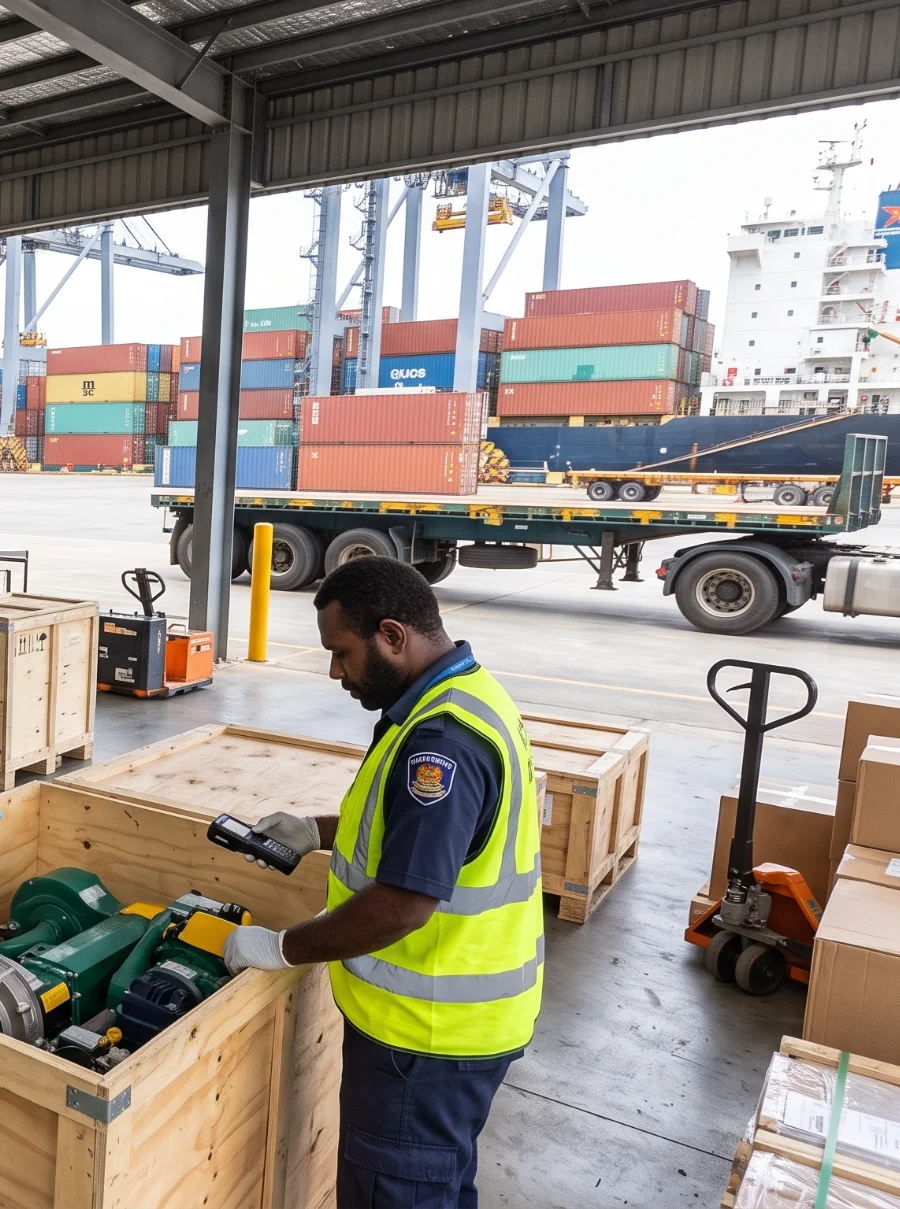
Theft and pilferage are risks at several points, particularly for high-value consumer goods and on long road legs. High-security seals, discreet packaging and reputable transport operators all reduce exposure.
Marine cargo insurance is essential. Check who arranges it under your Incoterms, what it covers, and whether it extends to the inland leg to your final destination, where cargo is often most exposed.
Choosing a freight forwarder for PNG
A good forwarder makes PNG shipping far more predictable. When comparing providers of international freight to PNG, look for:
- a genuine presence in PNG, through their own office or a long-standing agent, rather than a generic overseas partner;
- an established relationship with a licensed customs broker, or in-house brokerage;
- experience with your destination port and the inland leg, not just port-to-port freight;
- quotes that set out destination charges, clearance and delivery clearly, with the Incoterms stated;
- realistic transit times and straight answers about risks and delays.
Be wary of quotes that look cheap because they stop at the port, and of anyone who can’t explain how your cargo will get from the wharf to its final destination.
Common mistakes to avoid
- Shipping to Port Moresby when the cargo is needed in Lae or the Highlands.
- Using untreated or unmarked wood packaging.
- Shipping food, plant or animal products before the NAQIA permit has been issued.
- Inconsistent descriptions or values across the invoice, packing list and bill of lading.
- Budgeting for freight, but not for destination charges, duties, GST and inland transport.
- Treating arrival at the port as delivery.
Frequently asked questions
Is there a road between Port Moresby and Lae?
No. There’s no road connection between the two cities, so cargo landed in Port Moresby but needed in Lae or the Highlands has to travel on by sea or air. That’s why the choice of entry port matters so much.
Do I need a customs broker to import into PNG?
Yes. Import entries are lodged in Customs’ ASYCUDA World system by a licensed customs broker, whom the importer authorises on Customs Form G26.
What taxes are paid on imports into PNG?
Import duty at the rate for the goods’ tariff classification, excise on some goods, and GST at 10% on most commercial imports. GST is calculated on the CIF value plus duty and any excise.
How long does sea freight from Brisbane to PNG take?
Direct services from Brisbane take roughly four to eight days to Port Moresby or Lae, depending on the rotation. Allow extra time for clearance and the onward journey.
Do wooden pallets need to be treated?
Yes. Wood packaging, including pallets, crates and dunnage, must meet ISPM-15 and carry the treatment mark. Non-compliant packaging can be treated at extra cost or rejected.
Can I ship a container door to door to the Highlands?
Yes. The usual route is sea freight into Lae, then road transport along the Highlands Highway. Allow for road conditions, security arrangements and realistic transit times, and use a forwarder with proven inland capability.
Official sources
- PNG Customs Service: import procedures
- Australian Border Force: export requirements
- Department of Agriculture, Fisheries and Forestry: Micor import conditions for Papua New Guinea
- National Agriculture Quarantine and Inspection Authority (NAQIA): import permits and biosecurity requirements

Philip Thomas
Philip is the lead author and editor at Phantom8. He writes practical guides to shipping freight into Papua New Guinea, with a focus on choosing the right port, clearing customs and planning the inland leg.
General information only. This guide is general in nature and isn’t legal, customs, tax or financial advice. Rules, rates and schedules change, so confirm the details with the relevant authority, a licensed customs broker or your freight forwarder before you ship.