
ISPM-15 Wood Packaging and Fumigation Rules for Shipping to PNG
Pallets, crates and dunnage are among the most common reasons cargo is held by biosecurity officers. Here’s what ISPM-15 requires, how to check your packaging is compliant, and what happens in PNG if it isn’t.
In this guide
- ISPM-15 is the international standard for treating and marking solid wood packaging.
- Wood packaging shipped to PNG must be compliant; non-compliant packaging can attract extra charges, treatment or rejection.
- Check for the IPPC mark showing the country code, producer number and treatment code.
- Processed wood such as plywood and particleboard is generally exempt.
What ISPM-15 is
ISPM-15 is International Standard for Phytosanitary Measures No. 15, adopted under the International Plant Protection Convention. It exists because raw timber can carry wood-boring insects and diseases across borders, and packaging is one of the easiest ways for them to travel.
The standard applies to solid wood packaging material, including pallets, skids, crates, cases, boxes, cable drums, dunnage and timber used to brace or secure cargo. It requires the wood to be debarked, treated using an approved method, and marked to show it has been treated.
Approved treatments
- Heat treatment (HT): the wood is heated until its core reaches at least 56°C for a continuous 30 minutes. It’s the most widely used method.
- Methyl bromide fumigation (MB): a chemical fumigant. Its use is restricted in some countries for environmental reasons, but it remains an approved ISPM-15 treatment.
- Dielectric heating (DH): heating using microwave or radio-frequency energy.
- Sulfuryl fluoride fumigation (SF): a newer approved fumigant.
Reading the ISPM-15 mark
Compliant packaging carries a stamped or branded mark, usually on at least two opposite sides. The mark contains:
- the IPPC symbol, a stylised wheat ear;
- a two-letter country code, such as AU for Australia;
- a unique number identifying the producer or treatment provider;
- the treatment code, such as HT, MB, DH or SF.
The mark should be legible and permanent. Hand-written marks, labels or “equivalent” stamps aren’t acceptable.
What’s exempt
Some wood packaging falls outside ISPM-15, including:
- packaging made entirely of processed wood, such as plywood, particleboard, oriented strand board and veneer;
- wood 6 millimetres thick or less;
- sawdust, wood shavings and wood wool;
- wine and spirit barrels heated during manufacture;
- wood permanently fixed to vehicles or freight containers.
Exempt packaging still needs to be clean and free of bark, pests and soil. If you’re unsure, treat it or use plastic or metal alternatives.
What PNG requires
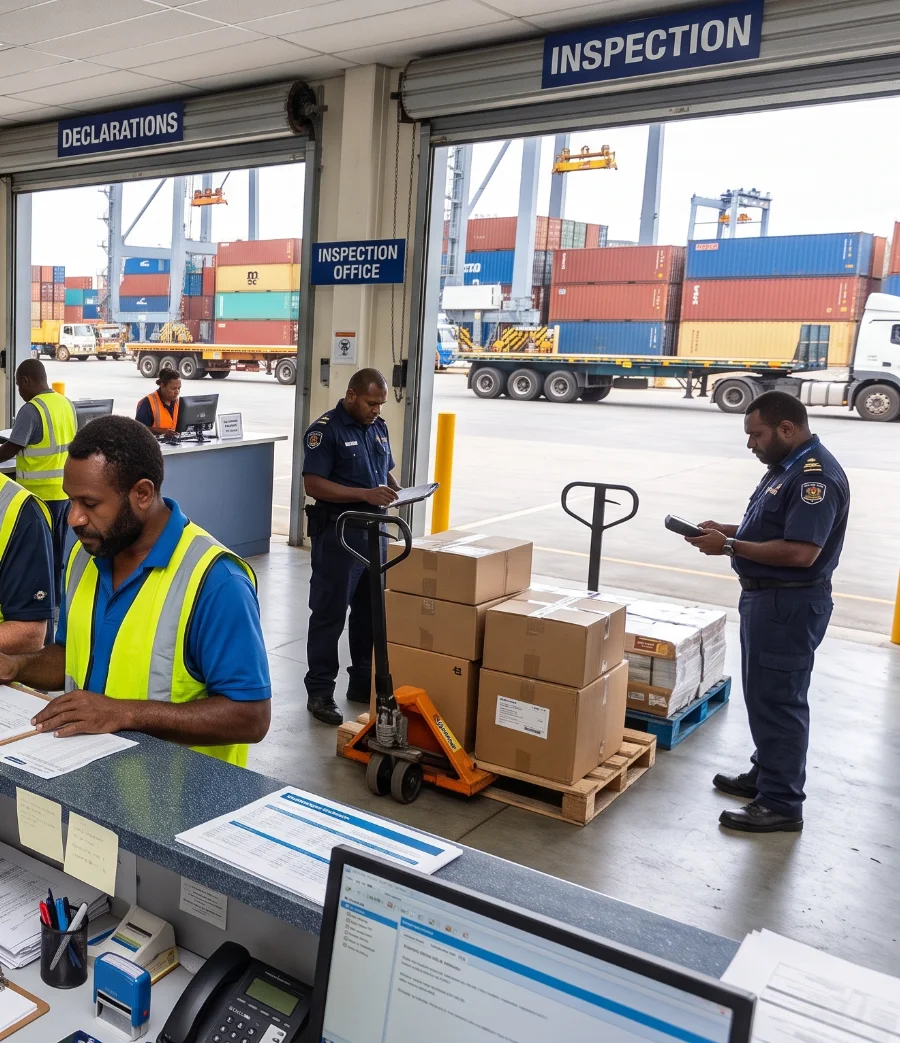
Wood packaging shipped to PNG must comply with ISPM-15. Biosecurity officers can inspect packaging on any consignment, and non-compliant packaging is subject to additional quarantine charges, treatment or rejection, with the costs falling on the importer.
Reused pallets need particular care. A pallet that has been repaired or rebuilt with untreated timber may no longer comply, even if it still carries an old mark. Under ISPM-15, repaired or remanufactured packaging generally needs to be re-treated and re-marked.
Fumigation beyond packaging
Some goods themselves, not just their packaging, need treatment before shipment. Import permits for certain timber, agricultural and plant products specify fumigation or other treatments, and the shipment must travel with a treatment certificate from a registered provider. In Australia, registered fumigators can use methyl bromide under conditions set by the Department of Agriculture, Fisheries and Forestry to meet importing countries’ requirements.
Fumigated containers must be properly ventilated before anyone enters them. Never open a fumigated container without confirming it’s safe.
A checklist for shippers
- Ask your supplier to confirm all wood packaging is ISPM-15 treated and marked.
- Check the mark on every pallet and crate before the container is packed.
- Avoid repaired pallets unless they’ve been re-treated and re-marked.
- Use processed wood, plastic or metal packaging where practical.
- Make sure dunnage and bracing used inside the container are also compliant.
- Keep treatment certificates with your shipping documents where the import permit requires them.
Frequently asked questions
Does ISPM-15 apply to plywood crates?
Generally no. Packaging made entirely from processed wood, such as plywood or particleboard, is exempt, but it must still be clean and free of pests.
What happens if my pallets aren’t compliant?
In PNG, non-compliant wood packaging can attract additional quarantine charges, treatment or rejection, at the importer’s expense.
Do I need a certificate for ISPM-15 pallets?
Usually the mark itself is the evidence of treatment. A separate certificate is needed where an import permit requires the goods to be fumigated or treated.
Are plastic pallets a good alternative?
Yes. Plastic and metal pallets fall outside ISPM-15 and avoid the risk of a wood packaging hold, although they cost more.
More on customs and import requirements
Sources

Philip Thomas
Philip is the lead author and editor at Phantom8. He writes practical guides to shipping freight into Papua New Guinea, with a focus on choosing the right port, clearing customs and planning the inland leg.
General information only. This guide is general in nature and isn’t legal, customs or logistics advice for your specific shipment. Port operations, road conditions, schedules and charges change, so confirm the details with your freight forwarder, transport operator or the relevant authority before you ship.