
Importing Vehicles and Heavy Machinery into PNG: Rules, Costs and Shipping Options
Vehicles and machinery are among the most valuable, and most closely checked, goods shipped to PNG. Here’s what to expect from customs, excise and biosecurity, how to ship them, and what happens after they clear the port.
In this guide
- Import excise on used vehicles ranges from 20% to 120% of value, depending on engine size, plus 10% GST.
- Once fees for brokerage, quarantine, port handling, inspection and registration are added, the landed cost can approach double the purchase price.
- Vehicles and machinery must arrive clean and free of soil and plant material.
- Vehicles left at the wharf for more than 30 days can be forfeited and sold.
Know the full cost before you buy
Vehicles bought overseas can look cheap, but PNG Customs warns buyers that the costs of importing them and getting them on the road are significant. Import excise on used vehicles ranges from 20% to 120% of the import value, depending on engine size, and 10% GST is added on top.
Then come broker fees, quarantine clearance, port handling, a safety inspection and registration. Together, these can often double the original purchase price. PNG Customs’ own example of a two-litre SUV shows import excise at 20% of the CIF value, before GST and the other charges.
How duties, excise and GST apply
The calculation starts with the CIF value: the purchase price plus freight and insurance to PNG. Import excise is then applied at the rate for the vehicle’s category and engine capacity, and GST at 10% is calculated on the CIF value plus excise. A customs entry fee also applies.
Heavy machinery such as excavators, loaders and cranes is classified differently from passenger vehicles, so duty and excise rates vary by type. Equipment imported for some resource projects may qualify for concessions under project agreements. Ask your broker to confirm the classification and any concession before purchase.
Biosecurity: clean means clean
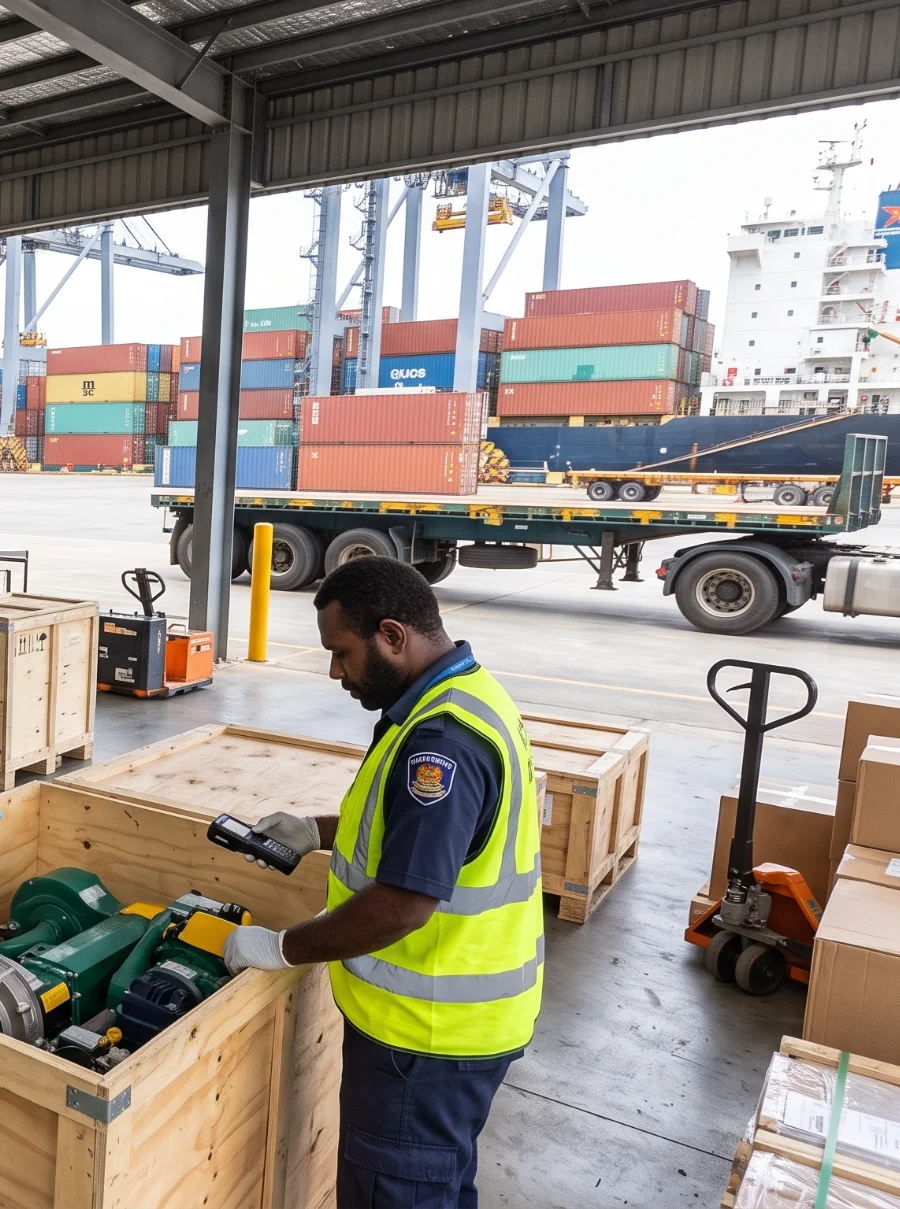
Used vehicles and machinery are a major biosecurity risk because soil, seeds and plant material collect in places that are hard to see. Inspectors check undercarriages, wheel arches, radiators, cabins, tracks, buckets and attachments.
Units that arrive dirty can be held, cleaned at the importer’s expense or sent back. Have machinery professionally cleaned before shipment, keep photos or a cleaning certificate, and pack it so it doesn’t pick up contamination on the way to the port. Wood used to brace or crate machinery must meet ISPM-15.
Documents you’ll need
- commercial invoice showing the price actually paid;
- bill of lading;
- export or deregistration certificate from the country of origin, for used vehicles;
- chassis or VIN, engine number, engine capacity and year or first registration date;
- importer details, including Tax Identification Number and customs registration;
- for machinery, specifications, weights, dimensions and lifting points;
- any permits that apply to the specific equipment.
Shipping options
| Method | Best for | What to know |
|---|---|---|
| Roll-on/roll-off | Vehicles and machinery that can be driven on and off | Availability to PNG varies by origin and service, so check sailings |
| Container | Cars, small machinery and attachments | Added security; units must be properly lashed and braced |
| Flat rack | Oversized or heavy items that won’t fit in a container | Exposed to weather; secure and protect the load |
| Breakbulk | Very large or heavy equipment | Often on multipurpose ships with their own cranes; check port crane capacity |
After clearance: getting on the road
Customs release doesn’t make a vehicle road-ready. In PNG, the Road Traffic Authority oversees vehicle inspection and registration, and vehicles need compulsory third-party insurance through MVIL before they can be registered and driven. Factor in the time for inspection and registration, especially for commercial vehicles that need additional licences.
Moving heavy machinery inland
Machinery bound for the Highlands usually lands in Lae and travels up the Highlands Highway on low-loaders. Check axle limits, bridge capacities and any permits or escorts needed for oversized loads before the machine leaves the port.
Go deeper
Don’t leave it at the wharf
PNG Customs warns that a vehicle left at a customs wharf for more than 30 days is forfeited to the State and can be sold or auctioned to recover the duty, GST, handling and storage fees owed. Have funds, documents and your broker ready before the vessel arrives.
Frequently asked questions
How much is import excise on a used car in PNG?
PNG Customs says import excise on used vehicles ranges from 20% to 120% of the import value, depending on engine size, with 10% GST added.
Do used vehicles need to be cleaned before shipping?
Yes. Vehicles and machinery must be free of soil and plant material, or they can be held, cleaned at the importer’s expense or sent back.
Can I drive an imported vehicle straight from the port?
Not legally on public roads until it has passed inspection, been registered and has compulsory third-party insurance.
What happens if I can’t collect my vehicle within 30 days?
It can be forfeited to the State and sold or auctioned to recover the duties and fees owed.
More on customs and import requirements
Sources

Philip Thomas
Philip is the lead author and editor at Phantom8. He writes practical guides to shipping freight into Papua New Guinea, with a focus on choosing the right port, clearing customs and planning the inland leg.
General information only. This guide is general in nature and isn’t legal, customs or logistics advice for your specific shipment. Port operations, road conditions, schedules and charges change, so confirm the details with your freight forwarder, transport operator or the relevant authority before you ship.