
Warehousing and Consolidation in Lae and Port Moresby: A Guide for Importers
Warehousing near PNG’s two main ports gives importers more control over cost, timing and security. Here’s how storage, consolidation and customs warehousing work in Lae and Port Moresby, and when they’re worth using.
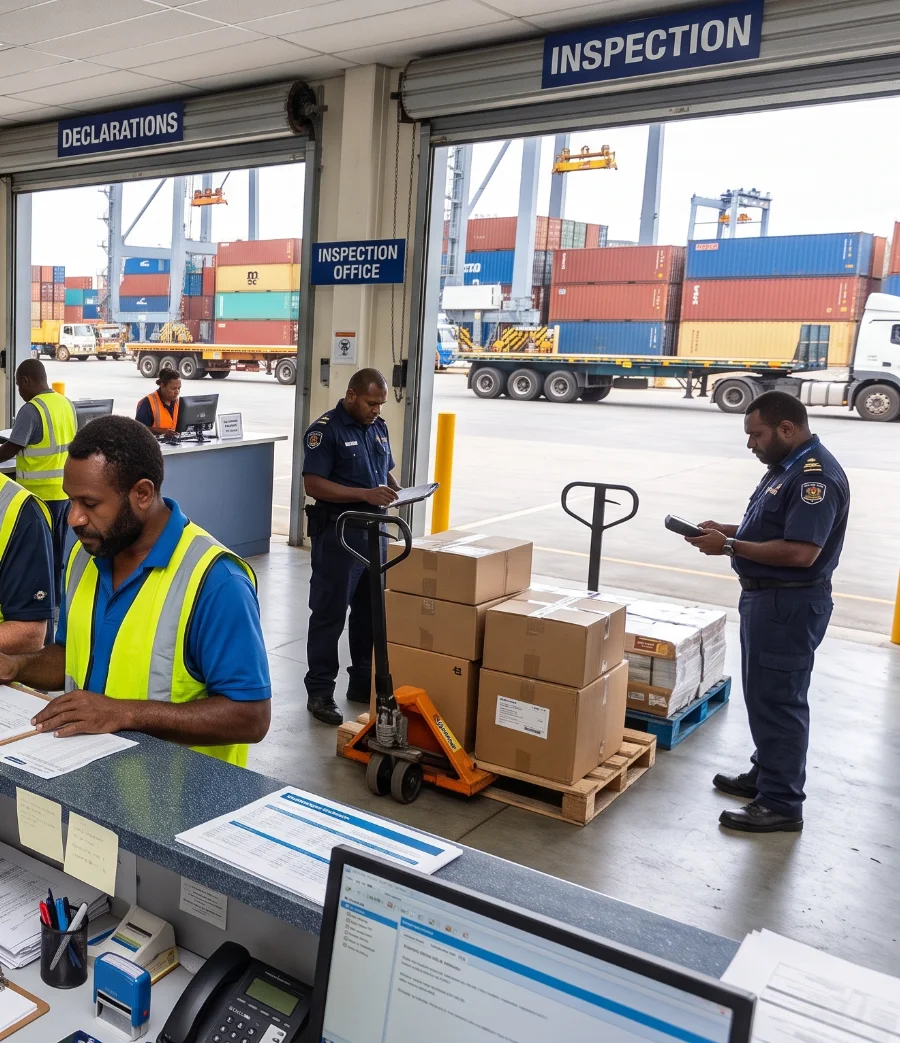
In this guide
- Lae and Port Moresby are PNG’s main warehousing hubs, close to the ports and airports.
- Consolidation can reduce trips up the Highlands Highway and container detention charges.
- Customs-licensed warehouses can hold dutiable goods for up to 12 months before duty and GST are paid.
- Security, insurance and stock control are critical when choosing a facility.
Why warehousing matters in PNG
Supply chains into PNG are long and exposed to disruption. A road closure on the Highlands Highway, a missed coastal sailing or a congested port can hold up deliveries for days. Holding stock close to the port gives importers a buffer, and gives them more control over when and how cargo moves inland.
Warehousing also helps manage cost. Container detention charges, multiple part-loads up the highway and urgent air freight to cover stock-outs all add up, and a well-run warehouse can reduce each of them.
Types of facility
General and cold storage
Both cities have general warehousing for dry goods, along with cold and chilled storage for food and other temperature-sensitive products. Services commonly include receiving, storage, pick and pack, labelling and dispatch.
Port storage and container freight stations
The ports offer container storage, refrigerated container points and container freight stations where LCL cargo is unpacked. These are useful for short-term holding, but storage charges escalate quickly once free time ends, so they aren’t a substitute for a warehouse.
Customs-licensed warehouses
A customs-licensed warehouse, often called a bonded warehouse, is a government-licensed facility where imported dutiable goods can be stored for up to 12 months without paying duty or GST. Duties are paid when the goods are released for home consumption, which helps cash flow for importers who sell stock gradually. The licence holder carries significant obligations, including liability for duty and GST on goods that are lost or can’t be accounted for, so these facilities operate under strict controls.
Consolidation and deconsolidation
Consolidation means combining several smaller consignments into fewer, fuller movements. In practice, it takes a few forms:
- Destination consolidation. Cargo from several suppliers is received in Lae, then combined into full truckloads for the Highlands.
- Deconsolidation. A container is unpacked near the port, the empty is returned promptly, and goods are distributed to different customers or sites.
- Cross-docking. Cargo moves straight from an inbound container to an outbound truck with minimal storage time.
- Project staging. Equipment and materials are held and released to site in the sequence the project needs them.
Go deeper
Lae or Port Moresby?
Lae is the natural base for distribution to the Highlands, the Markham Valley, Madang and the coastal ports served from Lae. Port Moresby suits retail, government and commercial supply to the capital and Central Province. Some importers run facilities in both cities, and some operators also offer storage in Highlands centres such as Mount Hagen.
Choosing a facility
When comparing warehouses, look closely at:
- Security: perimeter fencing, guarding, access control, CCTV and procedures for high-value stock.
- Location: distance from the port, truck access, and exposure to flooding during heavy rain.
- Insurance: what the operator covers, and what you need to cover yourself.
- Stock control: warehouse management systems, reporting and regular stocktakes.
- Equipment: forklifts, container handling, racking and cold storage if needed.
- Licences: customs licensing if you need bonded storage.
- Contract terms: storage rates, handling fees, minimum charges and liability.
How much buffer stock to hold
The right buffer depends on how long, and how predictable, your supply chain is. Start with the full replenishment lead time: ordering, production, sea transit, clearance and the inland leg. Then look at how much that lead time varies in practice, and how quickly a stock-out hurts your business or project.
Importers serving the Highlands often hold extra stock of fast-moving or critical items in Lae, so a highway closure or a delayed vessel doesn’t empty the shelves inland. Review the levels regularly, particularly before periods of heavy rain or when shipping schedules are disrupted.
Weighing the costs
Warehousing adds handling and storage costs, so it should save more than it costs. Compare it against the alternatives: container detention while boxes travel inland, extra truck movements for part-loads, port storage charges, emergency air freight to cover stock-outs, and the cost of lost sales or idle project crews. For many regular importers, a modest buffer stock in Lae or Port Moresby pays for itself.
Frequently asked questions
What is a bonded warehouse in PNG?
A customs-licensed warehouse where imported dutiable goods can be stored for up to 12 months without paying duty or GST until they’re released.
Should I unpack containers in Lae?
It often makes sense if you’re combining several suppliers, distributing to multiple sites or need to return containers quickly. For single deliveries, a sealed container straight to site can be simpler.
Can I store cargo at the port instead of a warehouse?
Only briefly. Port storage charges rise quickly after the free period, so it’s best used for short holds.
Is security a concern for warehoused goods?
Yes. Check fencing, guarding, access control and insurance carefully, particularly for high-value goods.
More on ports and inland logistics
Sources

Philip Thomas
Philip is the lead author and editor at Phantom8. He writes practical guides to shipping freight into Papua New Guinea, with a focus on choosing the right port, clearing customs and planning the inland leg.
General information only. This guide is general in nature and isn’t legal, customs or logistics advice for your specific shipment. Port operations, road conditions, schedules and charges change, so confirm the details with your freight forwarder, transport operator or the relevant authority before you ship.