
Exporting Food and Agricultural Products from Australia to PNG: Certificates, Permits and Pitfalls
Food and agricultural products face two sets of rules on the way to PNG: Australia’s export controls and PNG’s biosecurity requirements. Here’s how to meet both, in the right order, so your shipment isn’t held at either end.
In this guide
- Many food and agricultural exports need Australian government certification before they leave.
- PNG requires an import permit for plant, animal and many food products, issued before shipment.
- Check PNG’s conditions for your product in the Micor database before you sell.
- Order matters: PNG import permit, then Australian certification, then shipping.
Two sets of rules
Australian food and agricultural exports are controlled under the Export Control Act 2020. Many products, known as prescribed goods, can only be exported if they come from registered establishments and are certified by the Department of Agriculture, Fisheries and Forestry. Examples include meat, dairy, eggs, fish, grain, plants and plant products, and horticultural produce.
At the PNG end, plant, animal and biological products need an import permit from the biosecurity authority, NAQIA, which is being replaced by Biosecurity PNG. The permit sets the conditions the goods must meet, often including certificates or treatments from Australia.
Start with Micor
The department’s Manual of Importing Country Requirements, known as Micor, sets out what PNG requires for many Australian products. Check it before you agree to sell. It tells you whether a PNG import permit and a phytosanitary or health certificate are needed, and lists conditions such as freedom from pests and soil, packaging requirements and approved treatments.
Getting Australian export certification
Export certificates are issued through the department’s export documentation systems. The department has been moving commodities from its older EXDOC system to the newer NEXDOC system in stages, so check which system applies to your product. Exporters or their agents lodge requests for certificates, and the department or authorised officers inspect and certify the goods where required.
Prescribed goods usually need to come from an export-registered establishment, and some require inspection before loading. Allow time for registration, inspection and certificate issue in your schedule.
Doing things in the right order
- Check requirementsLook up PNG’s conditions for your product in Micor and confirm them with your PNG buyer.
- Secure the PNG import permitYour PNG buyer applies for the import permit before the goods are shipped.
- Arrange Australian certificationBook inspections and request the export certificate or phytosanitary certificate, matching the permit conditions.
- Lodge the export declarationCertified goods need an export declaration regardless of value.
- Ship with the right documentsSend certificates, the permit details and commercial documents with the shipment, and get originals to the PNG broker.
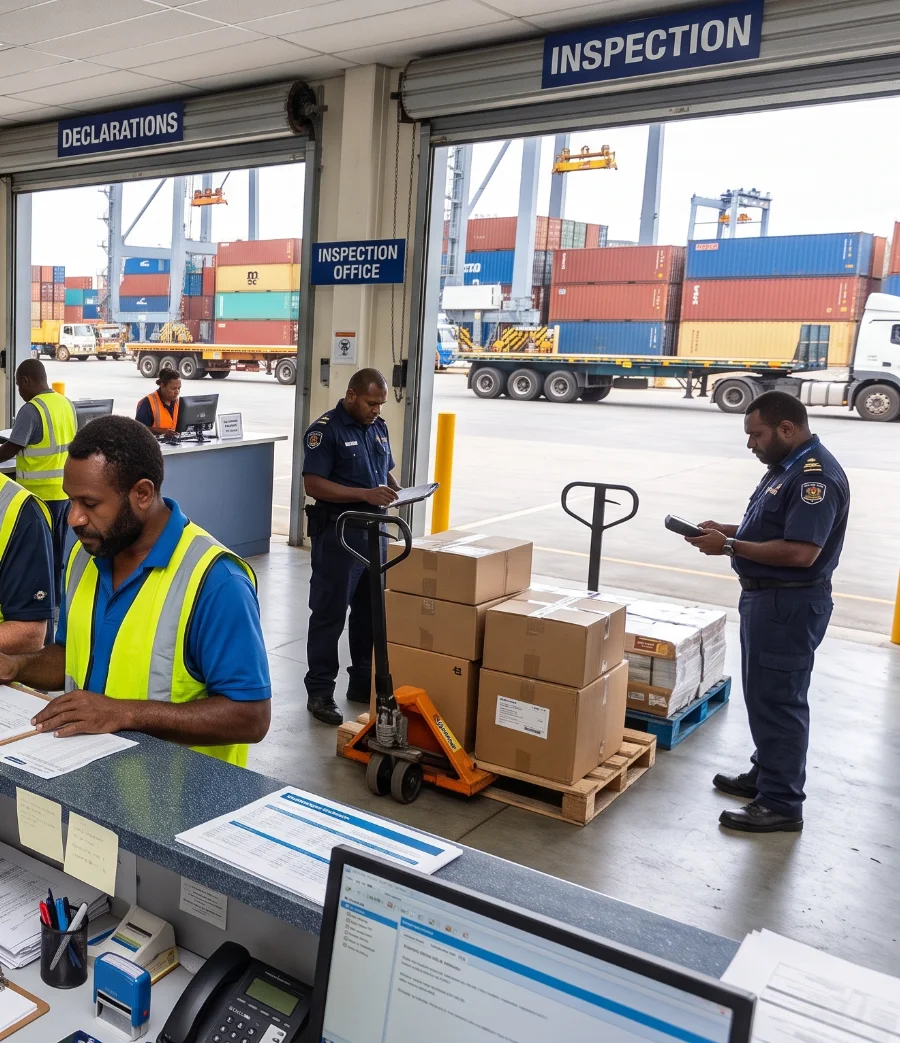
- Clear in PNGBiosecurity officers check the goods against the permit conditions before release.
Go deeper
Keeping the cold chain intact
Chilled and frozen products travel in refrigerated containers, which need power at every stage. Confirm reefer plug availability and monitoring at the PNG port, plan for prompt clearance, and arrange refrigerated transport or storage for the final leg. Delays that are inconvenient for dry cargo can ruin perishable goods.
Common pitfalls
- Shipping before the PNG import permit is issued.
- Certificates that don’t match the permit conditions or the commercial invoice.
- Untreated wood packaging, or soil and plant material on packaging and pallets.
- Mixing regulated food with general cargo without declaring it.
- Assuming last season’s requirements still apply.
Frequently asked questions
Do I need an export permit to ship food from Australia to PNG?
Many food and agricultural products are prescribed goods that need Australian export certification. Check your product’s requirements with the Department of Agriculture, Fisheries and Forestry.
Does PNG require an import permit for food?
Many plant, animal and food products need a PNG import permit before they’re shipped. Check Micor and confirm with your buyer.
What is Micor?
The Department of Agriculture, Fisheries and Forestry’s Manual of Importing Country Requirements, which lists other countries’ import conditions for Australian products.
What is NEXDOC?
The department’s newer export documentation system, which has been replacing EXDOC for different commodities in stages.
More on shipping from Australia to PNG
Sources

Philip Thomas
Philip is the lead author and editor at Phantom8. He writes practical guides to shipping freight into Papua New Guinea, with a focus on choosing the right port, clearing customs and planning the inland leg.
General information only. This guide is general in nature and isn’t legal, customs or logistics advice for your specific shipment. Port operations, road conditions, schedules and charges change, so confirm the details with your freight forwarder, transport operator or the relevant authority before you ship.